
As China emerges steadily and strongly from the negativity of the past few years, a trip to have a look at what is happening at the ground level was very much due. That is what I did, joining a bunch of investors on a week-long Deep Tech focused research trip across four cities in China in end September 2025.
We visited listed companies, unlisted companies, research institutes, VC funds and two industry fairs across four cities and also the largest electronics products/ component market in the world in Shenzhen. My co-attendees were an eclectic mix of public and private investors, industry practitioners across age groups and from various geographies. Thus, I came back with a wide spectrum of insights, outlooks and questions.
In this newsletter I will try and summarise some of the new (and not so new) takeaways from this trip. It should add another layer of understanding to the multilayered story that China is for all investors.
A New Corporate China is Emerging, Slowly but Clearly
The purpose of the Deep Tech trip was to explore the new kinds of businesses and capabilities being created in China. Some of the interesting takeaways:
1. Humanoid Robots are Coming
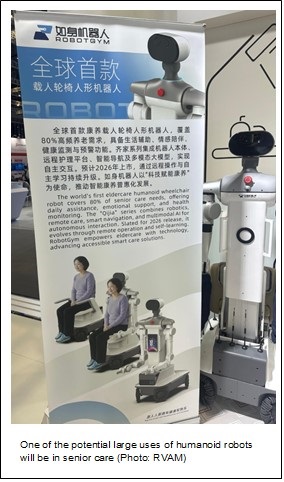
They are a bit clumsy, can only do activities which look relatively basic or gimmicky and, currently, cost more than what would be required for mass adoption. But their capabilities are rapidly improving and they will soon be in our local factories, a few years later in our malls and then in our homes. Their functionality is improving fast – dexterity, balance, speed, strength, battery life, etc. are all much better than even a year ago and are targeted to improve dramatically over the next 2-5 years.
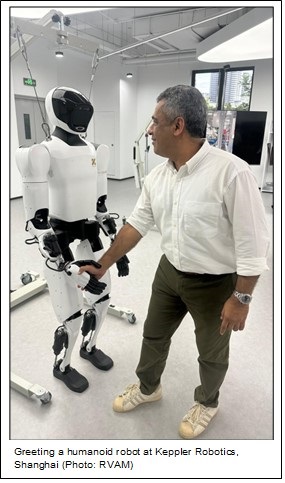
Think of these humanoid robots as akin to the first smartphones that came out in the 2006-2010 years. For instance, take the iPhone 3 which came out in 2008. The current iPhone 17 is much better than iPhone 3, but not exponentially better. All the current functionalities were already in the iPhone3 – processing speed, camera quality, storage, connectivity speed, display quality, etc. All these parameters have improved a lot in the past 17 years, but the parameters are the same. This is what is going to happen with these robots too. The physical parameters will certainly improve, but we are already on the right road.
Continuing the iPhone (smartphone) analogy, these robots will run on open software platforms, much like the App Store/ Play Store ecosystem. Hundreds of developers will have the freedom to develop various uses for these robots, and some of these will become the super apps which will integrate multiple uses. The final destination is that they become your cheap obedient factory worker or house butler to do whatever you want them to do. Unlike the single use robots we see in factories or homes today (think of them as the pocket calculator or cameras of the past), these new robots will have a very large variety of capabilities.
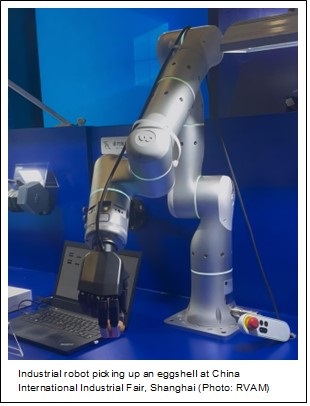
On the ground, a few factors stand out. Today, industrial use is the primary focus of the companies in this space. Already, tens of robots have started working in individual production lines of the auto, consumer electronics, computer and other industries. Companies like BYD, Hon Hai, Midea, etc. are all trying out large banks of these robots. As more data is collected on various tasks in the factory, their expertise will improve. Hence, usage and volumes will grow, costs will come down and the virtuous cycle will accelerate. At least that is the hope the industry players have. Another point is that a large component supply chain is developing, including touch and visual sensors, actuators, cladding, mechanical parts, etc. This is where China’s true core competence comes in. Add to this a wide collection of software creators, and we have the whole eco system.
Now the negatives. There are a lot of companies in this space. They vary in their achievements so far, but they are all running hard. The more successful names are Unitree; Ubtech; Dobot; Keppler Robotics which we met on this trip; etc., but there are many more. As it typically happens in a focus area of the Chinese government, robotics companies are getting monetary and non-monetary subsidies. Hence, the cost of capital is cheap. Technical capability in China is abundant. And there is a large market waiting, both for industrial and consumer uses. Hence, it encourages the creation of a lot of capable companies, thus making a good return on investment difficult. Finally, as in the EV space, a leader like BYD might emerge, but the market will be competitive. With the current ASPs for the robots sold by Ubtech at about USD 100,000, the prices have to come down. Ubtech itself has guided a 30% reduction in the next 12-18 months. Prices will need to drop to a USD 50,000 range for industrial adoption to really accelerate and an even lower price for consumer adoption.
2. China is Really Doing Deep Tech
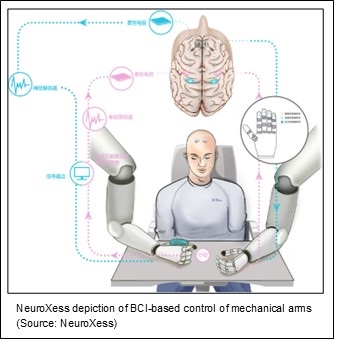
China is clearly throwing a lot of resources behind fundamental research. We define this as research where product creation and the monetisation path is not the immediate priority – capability development is more important. We met one research institute started in 2020 and helmed by a highly regarded Chinese academic who had spent decades in the US (more about this later). Currently it has over 200 researchers, is funded by the Beijing government and partners both Beijing University and Tsinghua university (the Stanford and MIT equivalents of China). They are doing work on Artificial General Intelligence (AGI) with their AI philosophy being “small data, big task”, which is the opposite of the “big data, small task” approach of the main players in the US. We also met NeuroXess, a company developing capabilities in the Brain Computer Interface (BCI) space.
They talked about their BCI solutions that comprise implants, electrode sensors and robotic machines to perform the implanting operations, their supporting data platforms, etc. This is the Neuralink of China. Finally, we also met a quantum computing company focused on photonic quantum computing called Boson Quantum. Their aim is to create solutions that work at ambient temperature.
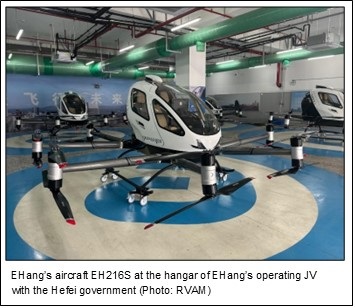
We also visited one of the first of two companies in China with licences to operate EVTOL flights as a public service. This company is one of EHang’s customers. EHang is the first EVTOL company in the world to get product certification, production certification as well as operating certification. China’s push towards the low altitude transportation ecosystem is real and moving fast on all fronts – technology, regulation and business structures.
The broad point here is that there is long term capital with a high-risk appetite to fund these long shot efforts. Some of it is government-linked but quite of bit of it is also private capital. This, combined with high quality human resources, means that the ecosystem is ripe for doing real Deep Tech work.
3. Humongous Manufacturing Capability
This is the most impressive and the scariest part of China in terms of the impact it will have on the rest of the world. We visited the Nio manufacturing facility (an EV brand) in Hefei, that showcased China’s high-end manufacturing capability; Huaqiangbei, the world’s largest electronic market in Shenzhen, which demonstrated China’s cheap mass market manufacturing capability; two industrial exhibitions (China International Industry Fair in Shanghai and the Shenzhen International Logistics Expo in Shenzhen), showing the huge number of players in multiple industrial verticals. This is clearly a manufacturing juggernaut with capabilities now equal to the best in the world and extremely competitive pricing. This is the upside of the policy-driven, returns-agnostic financial investments made by the system over the past three decades, combined with an infinite supply of good quality engineering talent. This could be a serious threat to manufacturing capacities in other countries around the world.
4. Return on Investment is Tougher Than in Any Other Market Globally
Competition is everywhere. It is fierce, omnipresent and across verticals. The only place where it does not exist is in mature, legacy verticals with low or no growth. The companies that emerge from this highly competitive environment, such as BYD, CATL, the solar guys, Midea/Haier, etc. are the strongest and the hungriest and hence difficult to beat in the global markets. We are seeing a similar environment being created in the humanoid robots space as was seen in the EV space in the past ten years. And I would not be surprised if in the next decade it happens across the semiconductor value chain too. The scale of the two industrial exhibitions we visited was huge, with both happening in parallel only a few hours’ flight from each other. The reason for this intense competition is twofold: 1) cheap public and private capital and 2) abundant low-cost technical labour. One interesting point to note here is regarding the availability of cheap private capital. We see large tech giants like Alibaba and Tencent investing across many high-tech verticals, similar to the large tech giants in the US. Also, since a lot of private wealth has been created by these companies (Tencent market cap is USD 800 bln and Alibaba’s is about USD 400 bln), this wealth is being recycled into private ventures as is done in Silicon Valley.
As investors, this is probably the most important point for us to keep in mind. Do not get enamoured simply by great products and capabilities. Keep a look out for competition.
Broader Societal Observations
1. China is Inexpensive
Here, we are not talking only about the stock market or the cost of money. The country feels inexpensive. It reminds me of my trips to the US about 15-20 years ago, when consumer products in the US felt cheaper than in Singapore (where we live). Now the US looks very expensive across the board. China, on the other hand, looks inexpensive across the board, both in services and products. Hotel rooms in Shenzhen in a globally-recognized 5-star hotel cost just USD 120 per night. A one-hour drive in a Didi ride share during peak hours cost only USD 11. A cup of coffee at the Shenzhen airport cost just USD 2.50. Some of the electronic goods we saw (admittedly lesser-known brands) at the Shenzhen electronic market were half the price of those an e-commerce website like Shopee. This is clearly cheap compared to the US, but for some of the items it also looks cheap compared to some of the emerging markets like India.
Car prices in China are mouth-wateringly cheap compared to anywhere in the world. Again, this means no fat profits for the producers. But it is great for consumers and for the overall competitiveness of China.
2. China Looks Crowded Again (at least the parts we visited)
We were on the Bund in Shanghai on a weekday evening and the crowd was elbow-to-elbow. This is a clear contrast from when we were last there about eleven months ago. Roads, restaurants, railway stations, high speed trains (Beijing to Shanghai) all looked fuller.
A curious point to note was the composition of the crowds at the two industrial exhibitions we visited. A large part of the crowd did not look like purely industry participants or even investors. There were students and young adults curiously loitering around, even a few families with kids, old neighbourhood uncles and aunties, etc. Maybe this is not unusual for China but one cannot imagine such participants at an industrial exhibition in the West.

3. China is Doing a Good Job of Attracting its Global Diaspora Back Home
The Chinese word for a person returning from overseas study or work (haigui) sounds exactly like the Chinese word for sea turtle. The analogy of sea turtles is fitting, as they are known to always return to where there are born. The return of this diaspora has been going on for long but seems to have accelerated from 2020 when the numbers grew by over 70% because of COVID-19. Post that, the increasing professional attraction of China, the improving quality of life and the increasingly hostile atmosphere for foreigners in the West has kept this flow going strong. We saw that the founders of many of the deep tech companies we met were these haigui returnees. They included people from the VC/PE sector, academics, engineers who were mid to upper management and also younger employees. Consequently, the number of new westerners settling in China seems to have reduced dramatically.
One interesting story on this front is the story of Professor Song-Chun Zhu who returned to China in 2020 after 28 years of a stellar research and academic career in the US. He heads the Beijing Institute of General Artificial Intelligence (BIGAI), which was our first meeting of the week. This is a research outfit set up for him by the Beijing government, Beijing University and Tsinghua University. He is a professor at both these top-notch universities. This is as unusual as a person being a professor at both Stanford and MIT. Numerous such examples exist in China.
4. The India Angle
This is a side note due to our perennial interest in India. The bulk of our investor group on this trip was from India, which is a remarkable point by itself. The group included many people who had a voice within the investor community and the ear of corporate India. Hence, it was great that they could have an on-the-ground view of China. These kinds of trips will clearly help corporate India understand and attempt to work more with China. We do believe that, geopolitics aside, India’s next phase of growth could benefit a lot from a closer economic co-operation with China. India needs cheap capital equipment, integration into global supply chains, engineering expertise and cheap capital. China needs a market to sell all its surpluses too. Hence, the synergies are high. If they can solve the political issues and bridge the trust deficit.
Conclusion
The Chinese economy has clearly built a path to get past the middle-income trap that a lot of countries at its current stage of development get stuck in. None of the past tigers from South East Asia built up the technical and manufacturing expertise that China has built up. North Asian success stories like South Korea and Taiwan did, but they did it in much smaller economies. Hence, if China moves from the current USD 12-13K per capita GDP (middle income) to a USD25K one (lower band of “developed market” categorisation) in the next 15-20 years (3.5-4.5% p.a. GDP growth), the world will look like a very different place.
China’s destiny is clearly not a given. But what we saw on this trip showed us that they have, at the margin, increased their probability of getting past this middle-income trap.
For investors, the primary take away is that this creative destruction of the global economic order will create large pools of wealth and, at the same time, destroy a lot of entrenched pools of current wealth creation. We have to be cognizant of this and make sure we are invested in the correct pool.
End
Disclaimer
This material is not intended as an offer or solicitation for the purchase or sale of any financial instrument. Information has been obtained from sources believed to be reliable. However, neither its accuracy and completeness, nor the opinions based thereon are guaranteed. Opinions and estimates constitute our judgement as of the date of this material and are subject to change without notice. Past performance is not indicative of future results. This information is directed at accredited investors and institutional investors only.